


It is raining season here, and for budgies, rain is never just weather. It is a signal. A trigger. In the wild, rain changes everything — flocks start moving, nests get built, life starts again. In my outdoor aviary here in the mountainous Balkans, the same rain arrives at a completely different time of year: late autumn, temperatures dropping, days getting shorter, winter right around the corner.
And this is exactly the time of year when I start thinking about food more seriously. Not fancy food. Not complicated food. Just the kind of food that actually supports them when they are using more energy to stay warm, when some of them are still growing new feathers, and when the last chicks of the season are still in the nest boxes.
This year, after five years of doing this, I wanted to show you exactly what works in my flock, what does not work, and how I make homemade egg food for my budgies at home — step by step, with the mistakes and the details you do not see on a pet shop bag.
Rain Means Breeding in the Wild, But Winter in Europe
For wild budgerigars in the Australian outback, rain is one of the most important triggers for survival and breeding. Budgies are nomadic birds. They do not stay in one place for long. Large flocks travel across the desert, often following rainfall, and when the rain comes, the desert briefly turns green, seeds appear, and the conditions become right to breed.
That is a completely different world from mine. Here in Europe, and more precisely in the Balkans, this time of year means we are getting closer to winter. Temperatures are already dropping. By the time I checked the breeding holes in this video, the temperature was already below 10 degrees Celsius.
So unlike wild budgies in Australia, my birds have to deal with a completely different seasonal environment. Rain here does not mean a breeding boom. It means cold, wet feathers, shorter daylight, molting, and a flock that needs to conserve energy.
Understanding that difference matters. A lot of budgie advice online comes from indoor birds in warm rooms, or from birds in completely different climates. What works for an outdoor flock in the Balkans in November is not always what works for a single budgie in a cage in a heated apartment.
How Budgies Keep Warm — And Why Rain Makes It Harder
One of the natural ways budgies keep warm is by fluffing up their feathers. When they fluff, they trap a layer of warm air close to their bodies. That is insulation. It is simple, and it works very well when the feathers are dry.
The problem starts when heavy rain soaks their plumage. Once the feathers are wet, that insulation becomes much less effective. Cold winds make things even worse, because the wind pushes through the wet feathers and cools the bird down faster.
Shorter daylight hours also influence their seasonal cycle. Many birds go through molting during this period. Growing new feathers requires energy and good nutrition, so providing a balanced diet is especially important right now.
You can also notice changes in their behavior during autumn storms. The birds move away from exposed areas and gather in more protected corners of the aviary. They sit closer together, avoid direct drafts, and make better use of the shelter.
And this is exactly why good aviary design matters so much. Protection from rain, wind, and cold drafts is just as important as having enough space to fly. Without that protection, even a good diet will not be enough. With it, budgies can handle cold weather in a way that surprises a lot of people.
Five minutes after I served the egg food in this video, the whole flock was asleep, all fluffed up, cozy, and simply enjoying life. You could still hear some singing, but they were definitely less active than in spring and summer. That is quite normal as the days get shorter and temperatures drop.
I had not turned on any heating during those days, and they seemed to be doing perfectly fine. After all, these are outdoor birds, and my flock is already used to living in an outdoor aviary. I do have a heater ready just in case we get extreme cold — because here in the Balkans, winter temperatures can get really low — but for normal autumn cold, they handle it well when they are fed properly and protected properly.
Why I Do Not Feed Just One Type of Seed
For at least the past five years, I have been using a mixed seed diet specifically prepared for budgies. You can find much cheaper options in pet stores, sometimes just a single type of seed in a box labeled for budgies. I would not recommend relying on just one type of seed.
A varied seed mix gives them a wider range of nutrients and makes their daily diet more balanced. One seed alone cannot cover everything, no matter how much you give them.
There is also a noticeable difference in how much the flock eats during summer compared to colder autumn days. In cold weather, I need to provide more food, and that means going through considerably more seed than usual. The birds are burning more energy, so they eat more. If you do not keep up with that, they will lose condition very quickly.
Autumn is also the time when many birds are growing new feathers, and this requires additional nutritional support. That is where egg food comes in for me.
Why Egg Food in Autumn, Molting, and Breeding
I like to include some egg food as a source of protein, either commercial or homemade, alongside their regular diet. Hard-boiled eggs can also be used as an ingredient, provided they are prepared and stored safely.
Egg food is not magic. It is not a replacement for seed, greens, or a balanced diet. But during colder weather, especially during breeding or molting periods, it provides extra protein and nutrients that help support feather growth and overall condition.
Even when they are not breeding, a varied and balanced diet is important to keep them in good shape for the colder months ahead. That is the whole idea: build them up now, so they go into winter strong.
More food does not automatically mean better nutrition. A balanced diet, fresh vegetables, clean water, and appropriate protein sources are all important. During colder months, I pay even more attention to how much food the flock consumes. Keeping a large flock healthy means making sure every bird has enough food and that the diet supports their needs throughout the changing seasons.
My Homemade Egg Food Recipe for Budgies
After five years of experimenting, this is the simple recipe I use. No complicated ingredients. No expensive additives. Just what my birds actually accept.
What you need:
- Eggs — hard-boiled, completely cooked
- Eggshells — cleaned and dried
- Plain rusk or breadcrumbs — to adjust the texture
- Finely grated carrot
- Seeds — mixed into the egg food, as I did this time
- Optional seasonal additions — for example, fresh dandelion leaves in spring
Step 1: Hard-boil the eggs properly
Start by hard-boiling the eggs for about 12 to 15 minutes, making sure they are completely cooked. Do not rush this step. The eggs need to be fully cooked before you use them for birds.
Once cooled, mash them well. Use a fork or a masher until you get a fine, even texture. You do not want big rubbery chunks.
Step 2: Do not throw away the shells
This is the part many people skip, and I think it is a mistake. Do not throw away the shells. Once cooled, crush them into a fine powder and mix them back into the mashed eggs. Egg shells are a natural source of calcium.
I crush them as fine as I can. You want powder, not sharp pieces. Mixed back into the egg, they disappear into the food, and the birds get the calcium without even noticing.
Step 3: Get the texture right — dry and crumbly
Now, the most important part is the texture. Budgies generally prefer food that is dry and crumbly rather than sticky or wet.
Mashed egg alone can be quite wet and sticky. If yours looks like that, add some crushed plain rusk or breadcrumbs until you get the right consistency. Keep adding a little at a time and mixing until the food looks crumbly and breaks apart easily.
This dry texture is also easier for the birds to eat. They can pick at it, move it around, and get it off their beaks much more easily than wet, sticky food.
Step 4: Add grated carrot
I also like to add some finely grated carrot. It provides beta carotene, which the birds can use to produce vitamin A.
The carrot also adds a little colour and interest to the mixture, which can make the egg food more attractive to birds that are trying it for the first time. Grate it very fine so it mixes evenly and does not make the whole mixture wet again.
Step 5: Add seeds and seasonal ingredients
This time, I added some seeds to the boiled egg. You can also experiment with other natural ingredients depending on the season. For example, in spring, I like adding some fresh dandelion leaves. They provide additional nutrients and make the egg food even more interesting for the birds.
The idea is to keep it familiar, but interesting enough that the birds want to investigate. Egg, shells, rusk, carrot, and seeds is a combination my flock knows well, and that is why it works.
How I Serve It in the Aviary
I serve the mixture in shallow feeding trays so more birds can reach it comfortably. In a large flock, this matters. If only one or two birds can eat at a time, the stronger birds will eat everything and the shy or younger birds will get nothing.
Shallow trays let many birds feed at the same time, and they make it much easier to clean after.
And one very important thing: egg food is perishable, especially at warmer temperatures. Do not leave it sitting in the aviary for too long. Remove leftovers after a short feeding period, ideally within one to two hours, and clean the trays properly.
That rule is non-negotiable for me. Egg food left all day in a tray is not a supplement anymore — it is a risk. Fresh egg food for an hour or two is enough for the birds to eat what they want. After that, it comes out.
If Your Budgies Do Not Like Egg Food at First
If your budgies do not like egg food at first, do not give up immediately. Try mixing a little bit with their regular seeds, fresh greens, or another food they already enjoy.
They might not touch it straight away, but give them some time. Sometimes curiosity takes over, and after an hour or so you will notice them starting to nibble on it.
This happened in my flock too — not in the first minute, but once a few brave birds started, the rest followed. Budgies learn by watching other budgies. Once they see that the food is safe, they become much more interested.
I also want to be honest about commercial egg food. Personally, I have not had much luck with commercial egg food from pet stores. My birds have always been much more interested in the homemade version. Of course, every flock is different, but it is worth experimenting a little to find out what your birds enjoy.
The Last Chicks of the Season
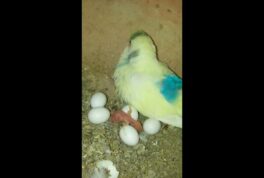
Even though almost all the nest boxes are empty, the holes in the walls are back again. There is still some activity going on inside. The temperature was already below 10 degrees Celsius, so I was not really expecting to find any new babies.
But inside there is a tiny miracle. These are the last chicks of this year’s breeding season, and they are still growing, waiting for the day when they will finally leave the nest and I can close all those nesting holes again.
They are growing beautifully. Healthy little bodies, beautiful feathers, no signs of splayed legs or injuries, and bright curious eyes. All thanks to their parents, who are doing an excellent job raising them. Even the male budgies are playing their part, helping to care for the little ones. It is a tiny happy family, and a lovely way to finish another breeding season.
This is Lady Nimbus, one of the most beautiful young budgies born here in my aviary. And these little ones are her chicks. It is quite special when you think about it. From one generation to the next, the story continues right here in my garden. A complete little circle of life inside my aviary.
I knew it the moment I held her in my hand. She was special, probably the most beautiful budgie I have ever had. Period. And then, of course, we have the rainbows. That is just my personal opinion — everyone has their own favorites, and that is what makes budgies so interesting. There are so many beautiful mutations and color combinations.
Her chicks are incredibly beautiful too. From blue birds with yellow heads to dark gray babies with yellow heads — such amazing color combinations. These are definitely some of the babies I am planning to keep for myself. I simply cannot let all these beautiful little ones go.
But there is one thing I need to keep an eye on: those bald patches. Tomorrow I will check them again to see if new feathers are growing, or if the mother might be plucking them. Hopefully it is just part of their feather development, but I will be monitoring them closely over the next few days.
That is an important reminder for anyone with chicks in the nest: do not just look once and assume everything is fine. Check again. Watch the feathers. Watch the mother. Small changes in the nest can tell you a lot if you are paying attention.
What About My Zebra Finches?
Almost the same situation with the zebra finches. They are eating more, spending more energy keeping themselves warm, and naturally becoming less active during these colder days. Most of the nest boxes are empty now and there is not much breeding activity going on.
One thing I am really happy with is how well the aviary is protected. The panels surrounding this section make a huge difference, especially when it comes to blocking cold winds while still allowing proper ventilation.
Zebra finches also go through molting, although their feather replacement is generally different from what we see in budgies. They do not usually have one heavy synchronized annual molt. Instead, they replace their feathers gradually, including changing their juvenile feathers as they mature.
The same principle applies: egg food can be a great addition to their diet during colder weather, especially during breeding or molting periods. The birds are different, but the need for protein and good nutrition in cold weather is the same.
And the Button Quails
And then we have these tiny button quails. Out of all the birds I keep, I find them among the easiest to care for. They are small, quiet, spend most of their time on the ground, and do not require complicated setups.
Of course, they still need proper food, clean water, enough space, and a safe environment. But once everything is set up correctly, they are relatively easy birds to keep.
It is a good reminder that not every bird needs the same setup. Budgies, finches, and quails all live in the same aviary system, but they use the space completely differently — and that is exactly how it should be.
My Final Advice After 5 Years
No matter which birds you keep, egg food can be a great addition to their diet during colder weather, especially during breeding or molting periods. It provides extra protein and nutrients, helping support feather growth and overall condition.
Even when they are not breeding, a varied and balanced diet is important to keep them in good shape for the colder months ahead.
Just remember: egg food is an addition to their regular diet, not a replacement for it. Give them a mixed seed diet they trust, add fresh vegetables and greens when you can, keep the water clean, protect them from wind and rain, and use egg food as support — not as a shortcut.
Five years later, this is still what works for me: simple homemade egg food, dry and crumbly, with shells for calcium, carrot for beta carotene, served fresh in shallow trays, and removed within one to two hours. Nothing fancy. Just consistent.
What is your favorite budgie mutation? Let me know — I am always curious what the flock thinks.
Thank you to our members for the continued support, and to all of you for watching. While you wait for the next update, check out the video on screen and I will see you soon.
FAQ: Homemade Egg Food for Budgies
Can budgies eat egg shells? Yes. In my recipe, I crush the shells into a fine powder and mix them back into the mashed egg. Egg shells are a natural source of calcium. Make sure they are completely cooled and crushed very fine.
How long should I leave egg food in the aviary? I remove leftovers within one to two hours. Egg food is perishable, especially at warmer temperatures, and should not be left sitting in the aviary all day. Clean the trays properly after feeding.
What texture is best for budgie egg food? Dry and crumbly. Budgies generally prefer dry and crumbly food rather than sticky or wet food. Add crushed plain rusk or breadcrumbs until you get the right consistency.
Can I add carrot to egg food? Yes. I add finely grated carrot. It provides beta carotene, which the birds can use to produce vitamin A, and it makes the mixture more interesting.
What if my budgies will not eat egg food at first? Mix a little with their regular seeds, fresh greens, or another food they already enjoy, and give them time. Curiosity often takes over after an hour or so.
Is egg food a replacement for seed? No. Egg food is an addition to their regular diet, not a replacement. A mixed seed diet, fresh vegetables, clean water, and appropriate protein sources are all important together.
When is egg food most useful for budgies? During colder weather, especially during breeding or molting periods. It provides extra protein and nutrients to support feather growth and overall condition.



Add comment