



Getting your first budgie is exciting. They are small, social, loud in a good way, and full of personality. They are also easy to get wrong in the first 30 days.
This guide covers the 10 things every new owner needs to get right: cage setup, food, how to tell male from female, signs of illness, taming, lifespan, toys, cleaning, introducing a second bird, and making your home safe. If you handle these 10, you avoid 90% of beginner problems.
1. Best Cage Size for Budgies
Size matters more than anything else you buy.
Budgies fly horizontally, not up and down. That means length is more important than height. A tall, narrow cage looks nice in a living room but is a poor home for a budgie.
Minimum for one budgie: 30 inches long x 18 inches wide x 18 inches high (76 x 46 x 46 cm)
Better for one budgie or a pair: 36-40 inches long (90-100 cm) with 18-20 inches depth. If you can go bigger, do it. There is no such thing as too big indoors as long as bar spacing is safe.
What to check when you buy:
- Bar spacing: 3/8 to 1/2 inch max (10-12 mm). Wider spacing can trap heads.
- Bar direction: Horizontal bars on at least two sides. Budgies climb with beak and feet.
- Shape: Rectangular. Avoid round cages. Round cages increase stress because birds have no corner to retreat to.
- Doors: One large front door for hand access plus small side doors for food bowls.
- Bottom: Pull-out tray with grate. The grate keeps feet out of droppings.
- Material: Powder-coated metal. No rust, no chipped paint, no zinc or lead.
Setup inside the cage:
Place perches at different heights but do not block the middle flight path. Use natural wood perches with varying diameters (3/8 to 3/4 inch) — willow, eucalyptus, apple, or java wood. Avoid using only smooth plastic dowels that come with cheap cages. They cause pressure sores on feet.
Put food and water at opposite ends to force movement. Keep one perch higher up for sleeping. Budgies like to roost high.
Place the cage against a wall, at chest to eye level, in a room where people spend time. Living room is ideal. Kitchen is not — fumes, temperature swings, and non-stick cookware fumes kill birds. Avoid hallways with constant drafts and avoid right next to a window with direct summer sun and no shade.
Cover three sides partially at night or use a separate sleep cage in a quiet room. Budgies need 10-12 hours of uninterrupted dark sleep.
2. Feeding Your Budgie Right
A seed-only diet is the most common reason pet budgies live 4-5 years instead of 10+.
Wild budgies eat seeding grasses, but pet budgies on dry seed mix alone get too much fat and too little vitamin A, calcium, and vitamin D3. The fix is not complicated: pellets as base, vegetables daily, seeds and millet as reward and enrichment.
The practical mix that works:
- 60-70% high-quality budgie pellets: Formulated for small parakeets. Convert slowly over 2-4 weeks by mixing with old food, not by sudden switch.
- 20-30% vegetables: Offered fresh daily in the morning.
- 5-10% seeds + treats: Small amount of quality seed mix and millet spray for training.
- Water: Fresh, changed daily. Wash the dish, do not just top it up.
Vegetables budgies usually accept: Leafy greens (romaine, kale, Swiss chard, dandelion leaves), broccoli, grated carrot, bell pepper, zucchini, peas, cooked sweet potato, cucumber. Wash everything. Chop to budgie size. Offer in a separate shallow dish, not on top of seeds.
Fruit in small amounts, 1-2 times per week: Apple (no seeds), pear, banana slice, berries, melon, mango. Fruit is sugar. Think of it as dessert.
Millet spray: Hang a small piece in the cage. It is excellent for taming and for new birds that are too stressed to try new foods. Do not leave a full spray 24/7 for months — it is fatty and birds will pick it over everything else.
If your bird only eats seeds right now:
Seed mix can keep a bird going short-term, but add a bird-specific liquid vitamin + mineral supplement to close the gap. Look for a product formulated for parakeets with vitamin A, D3, E and calcium + iodine. Add the exact dose on the label to drinking water. Change that water daily. More is not better — fat-soluble vitamins build up and cause toxicity.
Long-term, keep converting to pellets + vegetables. Sprouted seeds are a good middle step. Soaked and sprouted for 24-36 hours (rinsed well, no mold, no smell) have better vitamin content and most seed-addicted budgies accept them.
Do not overfeed fresh food. Offer a tablespoon per bird in the morning, remove uneaten fresh food after 3-4 hours to prevent spoilage, especially in summer.
Foods that are toxic and must never be offered: Avocado, chocolate, onion, garlic, caffeine, alcohol, apple seeds / fruit pits, uncooked beans, mushrooms, salty snacks, butter/oil-heavy human food. Also avoid grit with oyster shell offered free-choice for budgies — they hull seeds and do not need insoluble grit like pigeons do.
3. How to Tell Budgie Gender
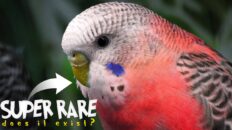
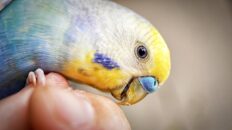
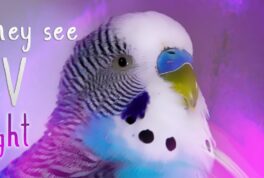
For most normal mutations, look at the cere — the fleshy band above the beak where the nostrils sit.
Adult birds (over 8-12 months):
- Male: Solid blue to deep blue-purple cere, smooth and even.
- Female: Beige to tan to brown, often crusty or flaky, especially in breeding condition. Out of breeding condition it can fade back to pale blue-white with tan around nostrils.
Young birds (under 6 months): Both sexes can look pink-purple. Males tend toward even pink-purple. Females often show white rings around nostrils or a paler center. Do not sex a baby by cere color alone on day one.
Exceptions where cere does not work: Lutino, albino, recessive pied, and some Danish pied males keep a pink-purple cere for life. In those cases behavior, leg band / breeder records, or DNA test is more reliable.
Does gender change care? Daily care is the same: same cage size, same diet, same sleep. What changes is behavior.
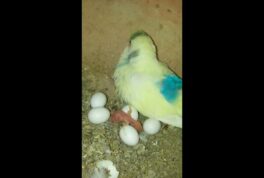
Males are usually more vocal, more likely to mimic sounds, whistle tunes, and bob their heads. Females tend to be more territorial about the cage, chew more, and can be bossier with toys and perches. Females can lay eggs even without a male — do not provide a nest box unless you are prepared to breed responsibly.
4. Budgie Illness Symptoms
Budgies hide sickness. In the wild, a visibly sick bird gets targeted. By the time a budgie looks clearly sick, it is often already serious. Watch for small changes early.
Call an avian vet promptly if you see:
- Fluffed up for hours, eyes half-closed in daytime
- Sitting on cage floor, not perching
- Tail bobbing with each breath, open-beak breathing, wheezing or clicking
- Sneezing repeatedly, wet discharge from nostrils or eyes
- Change in droppings lasting more than 24 hours: no white urate part, bright green/yellow runny droppings, blood, undigested seeds
- Eating much less or drinking much more than usual
- Vomiting (head shaking with wet seeds stuck to head, not normal courtship regurgitation to a mate/toy)
- Lumps, swelling, overgrown beak, scaly / crusty cere or feet that spreads, feather loss with red skin, constant scratching
- One wing drooping, limping, unable to fly suddenly
What to do while you wait for the vet:
Move the bird to a warm (80-85°F / 26-29°C), quiet hospital cage with low perches, food and water close by. No drafts. Do not try antibiotics from internet advice. Wrong dose kills small birds fast.
Budgies crash fast because they have high metabolism and low reserves. Waiting 3-4 days to “see if it passes” is how a treatable infection becomes fatal. If you are unsure, call. Avian vets prefer an early call over a late emergency.
Find your avian vet before you need one. Not all small-animal vets see birds. Save the emergency number in your phone.
5. Budgie Training Basics: Taming and Step-Up
Taming is trust, not dominance. You cannot force a budgie. You can convince it your hand means good things.
Week 1: Be boring and safe Put the cage where you spend time. Talk near the cage in a calm voice. Move slowly. Do not grab. Let the bird watch you change food and water. Read, work, whistle. Goal: human = background, not threat.
Week 2: Treat through bars Offer a small piece of millet spray through the bars. Hold still. Let the bird come to you. If it does not come in 5 minutes, leave it clipped near a perch and try later. Repeat 2-3 short sessions per day, 5-10 minutes each.
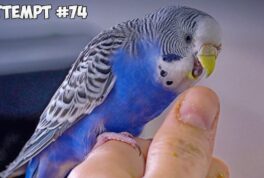
Week 3: Hand inside the cage Place your hand still inside the cage door with millet in fingers. No chasing. Let the bird approach. Rest your index finger like a perch next to the perch it sits on. Gentle pressure under the chest with the voice cue “step up” works once the bird is already comfortable.
When it steps up, hold steady, praise calmly, give millet immediately. Bring it a few inches, then back to perch. End on a success.
Rules that speed up taming:
- Train before meals, not right after a big feed.
- Same time, same place, same cue words.
- One person starts. Once the bird steps up for one person, others copy the same method.
- Never grab from above. That is how predators attack.
- Never punish biting by yelling, shaking the hand, or spraying water. A bite means “too fast.” Go back one step.
- End the session if the bird pants, flies frantically, or freezes for minutes. Quiet time helps more than pushing.
Every bird is different. A hand-fed baby may step up in days. A pet-store adult that was never handled may need 4-6 weeks. Consistency beats long sessions.
6. Secrets to a Long Budgie Life
Average is 7-10 years. Well-kept budgies often reach 12-15. Short lives are usually not “bad luck” — they are diet + chronic stress + no vet care.
What actually extends life:
- Pellet + vegetable diet instead of seed-only. Vitamin A deficiency alone causes respiratory and skin problems.
- Sleep: 10-12 hours dark, quiet sleep. Chronic short sleep weakens immunity and increases biting and screaming.
- Stable routine: Same feeding time, same sleep time, same cage location. Budgies handle routine well and handle chaos poorly.
- Low stress environment: No constant loud TV next to cage, no dogs pawing the cage, no kids shaking it, no cigarette smoke, no strong perfume / air freshener sprayed near the cage.
- Exercise: Daily flight, even if it is just laps in a bird-proofed room. Fat, sedentary budgies get fatty liver disease.
- Yearly vet check: Weight tracking (a kitchen scale in grams catches problems early), beak/nail check, droppings check.
Stressors that shorten life and people underestimate: Sudden temperature drops, drafts from AC pointed at cage, overheating in direct sun with no shade, night frights from headlights / shadows, moving the cage every week, new pet staring at cage all day, Teflon-type fumes, scented candles, and irregular day/night cycles.
Keep chemicals, smoke, and strong fumes away. If you would not want to breathe it in a small closed box, do not force a 30-gram bird to breathe it.
7. Keep Your Budgie Entertained
A bored budgie screams, bites, plucks feathers, or just sits puffed all day. Enrichment is not decoration. It is health care.
Inside the cage, rotate every week:
- 1 swing
- 2-3 perches with different textures and diameters
- 1 ladder or bridge to climb
- 2-4 small toys: bells, balsa wood, palm leaf, paper, vine balls
- 1 foraging toy: hide seeds in a paper cup with shredded paper, or in a foraging wheel
Shreddable toys deserve a special mention. Budgies need to chew. Balsa, sola, yucca, paper, and palm leaf satisfy beak, jaw muscles, and brain at once. They make a mess. That mess means it works. Replace when chewed to stubs so loose strings do not trap toes.
About mirrors: Small mirror toys often create obsession. Single budgies can bond to the “bird in the mirror,” regurgitate to it, become territorial, and lose interest in people. If you use a mirror, keep it small, temporary, and watch behavior. If the bird feeds the mirror, screams at it, or ignores you, remove it and replace with interactive and foraging toys.
Fresh branches: Offer pesticide-free branches from safe trees (apple, willow, hazel, eucalyptus) with leaves washed. They provide chewing, perching, and novelty. Avoid cherry, oak, yew, and any sprayed garden wood.
Out-of-cage time: 1-2 hours daily in a bird-proofed room under supervision. Close windows and doors, cover mirrors and windows initially, turn off ceiling fans, hide cords, remove toxic plants and open water. A play stand or playground with food, water, and toys gives them a landing spot that is not your curtain rod.
Goal is simple: move, chew, forage, explore every day.
8. Cage Care: How Often and How
Clean cage = healthy lungs, healthy feet, fewer mites.
Daily (3-5 minutes): Change water, wash water dish, remove droppings from top perches, replace soiled cage liner, remove old fresh food, quick check of food level.
Weekly (20-30 minutes): Move bird to safe spare cage or bird-proofed room. Remove all trays, grates, bowls, perches, toys. Wash bowls in hot soapy water, rinse well. Scrub tray and grate. Wipe bars. Replace liner / bedding fully. Washed perches must dry completely before going back. Rotate 1-2 toys.
Monthly: Deep check: loose toy parts, frayed rope, rust spots, sharp wire ends, broken perch holders. Sand or replace worn wooden perches.
Safe cleaning products: Bird-safe cage cleaner from a pet brand, or white vinegar + water (1:1) for general wipe-down, then rinse and dry. No bleach residue, no ammonia, no aerosol sprays, no strong disinfectants, no scented cleaners used while bird is in the room. If you must disinfect after illness, follow vet advice and rinse multiple times, air dry fully.
Mites love dirty cages. Leftover food, damp bedding, and built-up droppings create habitat. Scaly face/feet mites cause crusty growth on cere, beak, and feet. Feather mites cause itching, feather damage, restlessness at night. Red mites hide in cage cracks in daytime and feed at night.
If you see constant scratching, bald patches, scaly skin, or tiny moving dots near the vent or at night with a flashlight, do not guess with pet-store sprays. Get a diagnosis. Early treatment is simple. Late infestation plus anemia is not.
A small tray or extra liner under the favorite roosting spot makes daily cleaning faster and reduces contact with old droppings.
9. Introducing Budgies Safely
Do not just drop a new budgie into the old budgie’s cage. That triggers territorial fights.
Step 1: Quarantine — 30 days, separate room New birds can carry infections with no symptoms. Separate airspace, separate food scoops, wash hands between birds. Watch droppings, appetite, sneezing, energy. A vet check during quarantine is ideal.
Step 2: See but not touch — 7-10 days Place cages in same room, a few feet apart. Let them hear and see each other. Talk to both. No shared out-of-cage time yet.
Step 3: Neutral meetings — short and supervised Meet on a neutral play stand, not inside either bird’s cage. 10-15 minutes at first. Watch body language.
Friendly signs: chirping back and forth, preening near each other, feeding side by side, beak touching without lunging.
Separate immediately if you see: hard staring with pinned eyes, raised wings and rushing, hard pecking and chasing, one bird cowering in corner panting. Try again next day. Increase time gradually.
Step 4: Share a cage only when calm Clean and rearrange the main cage first so it feels new to both. Provide two food dishes and two water dishes at first to prevent guarding. Provide enough perches so they can sleep apart if they want.
Not all budgies become best friends. Peaceful coexistence with separate favorite spots is a win. Do not force cuddling. Respect their choice.
Never introduce a new bird to a sick bird, or during a stressful molt, move, or vet treatment. Wait until both are stable.
10. Is Your Home Safe for Your Budgie?
Your home looks safe to you. To a 30-gram bird with air sacs that pull air through the body ultra-efficiently, it has hidden traps.
Air and fumes — the biggest killer:
- Non-stick cookware (PTFE/Teflon) overheated, self-cleaning ovens, space heaters with PTFE parts
- Scented candles, wax melts, incense, plug-in air fresheners, essential oil diffusers used in same room
- Aerosol sprays, strong cleaning products, paint fumes, glue, nail polish remover
- Cigarette / vape smoke
Use these in ventilated areas away from birds, or replace with bird-safe alternatives. If you cook with non-stick, never heat empty pans, never leave high heat unattended, and keep birds out of kitchen airspace.
Plants: Many common houseplants are toxic if chewed: philodendron, pothos, dieffenbachia, poinsettia, oleander, lily, ivy. Keep plants out of reach or keep only bird-safe plants in the bird room. Assume any unknown plant is unsafe until checked.
Physical hazards:
- Open windows and doors — clip? No. Train recall and manage doors instead. Keep windows closed or screened during out-of-cage time.
- Curtain cords and blind cords — entanglement risk. Tie up and secure.
- Ceiling fans, open toilets, open pots, full sinks/bathtubs — turn off / cover / close doors.
- Electrical cords, small rubber bands, small toys, paint chips, loose metal — chewing and swallowing risk.
- Other pets — never leave cats/dogs alone with a free-flying budgie, even “gentle” ones. One bite or scratch carries deadly bacteria.
Best setup: One bird-proofed room or corner as the playground. Play stand with food/water, a few toys, and a familiar perch. Supervise all out-of-cage time. Check windows before you open the cage door. It takes 10 seconds and prevents the most painful beginner mistake — a fly-out.
First 7 Days Checklist for New Owners
- Cage set up 24 hours before bird arrives, with food, water, one millet piece
- Quiet room, no handling day 1 except to place in cage
- Same wake/sleep times from day 1
- Offer pellets + seeds side by side, plus chopped greens on day 2-3
- 5-minute talking sessions, no grabbing
- Weigh bird (in grams) on day 2 and write it down — baseline weight
- Book avian vet wellness check within first 2-4 weeks
FAQ
How long do budgies live? 7-10 years on average, 12-15 with pellet-based diet, 10-12 hours sleep, daily exercise, and vet care.
What is the best diet for a budgie? Pellets as base, vegetables daily, small amount of seeds, millet for training, fresh water daily. Seed-only is not enough long-term.
How can I tell if my budgie is sick? Fluffed for hours, sitting on floor, tail bobbing, breathing through open beak, discharge, change in droppings/appetite, lumps, constant scratching. See an avian vet fast — budgies decline quickly.
How long does taming take? Days for a hand-fed baby, 3-6 weeks for an untame adult with daily 5-10 minute sessions. Patience and millet beat force every time.
Can I keep a single budgie? Yes, if you spend time daily, talk, train, and provide enrichment and out-of-cage time. If you work long hours away from home, a pair is kinder than a lonely single bird.




Add comment