
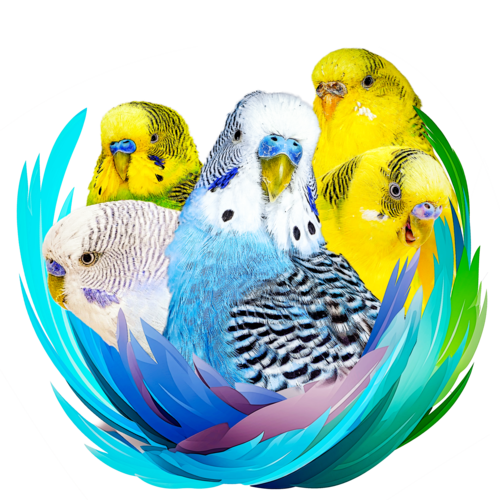


Most people picture a budgie as a small green parakeet. In the wild, that is correct. Wild budgerigars from Australia are light green with black barring, and green remains the dominant color in nature.
In captivity it is a different story. After more than a century of selective breeding, pet budgies now exist in over 30 recognized color varieties. They range from pale sky blue to dark olive, grey, violet, and the multi-toned bird breeders sell as a rainbow.
This guide covers the base colors every owner should know: the Green series and the Blue series, plus dark factor, grey and violet, and what makes a true rainbow budgie.
How Budgie Color Actually Works
You only need three ideas to understand almost every pet budgie color.
1. Green = blue + yellow A budgie does not have green pigment. Feather structure reflects blue light, and the bird produces a yellow pigment called psittacin. Blue structural color plus yellow pigment equals the green we see. Remove yellow and the bird looks blue. Remove blue structure in some mutations and the bird looks yellow or white.
That is why older breeders talk about two base families:
- Green series: birds that still have yellow. Yellow base, white or yellow face depending on variety.
- Blue series: birds with no visible yellow. White base. What people call a blue budgie is a green bird with yellow removed.
2. Dark factor adds depth Dark factor is semi-dominant and comes in 0, 1 or 2 doses:
- 0 dark factors = light form – Light Green or Sky Blue
- 1 dark factor = medium form – Dark Green or Cobalt
- 2 dark factors = darkest form – Olive or Mauve
Dark factor does not change the pattern, it darkens the body color and changes cheek patch and tail shade. This is the fastest way to learn the chart.
3. Added genes modify the base Grey, violet, yellowface, opaline and clearwing sit on top of the base color. A grey-green is still a Green series bird with a grey wash. A violet cobalt is still a Blue series bird with violet added. A rainbow is still a Blue series bird with yellowface plus opaline plus clearwing combined.
No color needs different food, cage size or care. Color tells you about genetics, not health or temperament.
Green Series Budgie Colors
Green series birds have yellow pigment present. If the face is yellow and the body has a green tone, you are in Green series.
1. Light Green – The Wild-Type Color
Light Green is the original, wild color. Bright grass green, no dark factor.
Identification:
- Body: even, bright grass green
- Cheek patches: violet
- Tail: dark blue
- No muddy or grey tone
If you buy a normal green parakeet from a pet shop without a mutation label, it is almost always Light Green. All other greens are dark-factor versions of this.
Breeders use Light Green to keep size and vigor in a line because outcrossing to normal green often improves feather quality.
2. Dark Green – One Dark Factor
Dark Green is Light Green plus 1 dark factor. It is the intermediate green.
It looks noticeably deeper than Light Green but not muddy like Olive. Cheek patches and tail run darker, similar to Olive, which confuses beginners.
Practical tip: put the bird in daylight next to a known Light Green. Dark Green holds a forest-green tone. Light Green looks almost yellow-green in comparison.
3. Olive Green – Two Dark Factors
Olive is Light Green plus 2 dark factors. It is the darkest green.
In the video this is described as muddy green, often blotchy or patchy. That patchy look is normal for Olive. Many Olives do not have the clean, even body of a Light Green.
How to separate Olive from Grey-Green:
- Olive tail: dark blue, often with a muddy cast
- Grey-Green tail: tends toward blackish with grey tone
- Cheek patches differ – Olive keeps a darker violet-blue patch, Grey-Green looks greyer
Olive is uncommon in pet shops because two dark factors are harder to fix in a pairing without producing mostly Dark Greens.
4. Grey-Green – Green With Grey Wash
Grey-Green is not the same as Olive, even though photos look similar.
Here a grey factor lays a grey wash over green. The result is a dull, grey-tinted green that changes with the number of dark factors. Light Grey-Green, Medium and Dark versions all exist.
Look at tail and cheeks, not just body:
- Body: green muted by grey
- Cheeks: greyish, not clean violet
- Tail: darker, blackish compared to Olive
Grey is dominant, so one parent showing grey can produce grey chicks. That is why Grey-Green pops up unexpectedly in mixed pairings.
Blue Series Budgie Colors
Blue series birds have no yellow pigment in the body. Face is white in normal blue, yellowish in yellowface types. If the body has no green tone at all, you are in Blue series.
This is where the most popular pet colors sit.
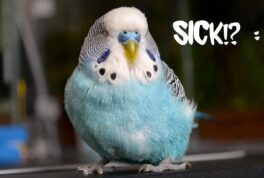
5. Sky Blue – The Most Popular Mutation
Sky Blue is the lightest blue. No dark factor. This is Light Green with yellow removed.
Appearance:
- Body: soft, pale sky blue, often iridescent in daylight
- Cheek patches: violet
- Tail: dark blue
It is described in the video as the most loved mutation worldwide, and sales reflect that. When people search for blue budgie, they usually mean Sky Blue.
Care note: Sky Blue shows dirt and pin feathers more clearly than green. That does not mean illness, just lighter feather contrast.
6. Cobalt – One Dark Factor Blue
Cobalt is Sky Blue plus 1 dark factor.
It is a richer, deeper blue than Sky Blue, about one shade darker. Cobalt is rarer than Sky Blue, which matches market supply. Most blue clutches with one dark-factor parent produce roughly half Sky Blue, half Cobalt.
Identification:
- Body: strong medium blue, no green tone
- Cheeks: violet-blue, darker than Sky Blue
- Tail: dark blue
In indoor light Cobalt and Violet can look close. Check the neck in daylight – violet birds show a pinkish-violet sheen that Cobalt lacks.
7. Mauve – Two Dark Factors Blue
Mauve is Sky Blue plus 2 dark factors. Darkest blue.
The bird looks muddy, greyish-blue and often patchy. Beginners call it grey, but it is genetically blue.
How to confirm Mauve:
- No green anywhere, so not Olive
- Body uneven, dusty blue-grey
- Cheeks and tail follow blue series, not the black tail of a true Grey
Mauve to Mauve pairings always produce Mauve, but many breeders avoid them because body color can look flat and lose contrast with markings.
8. Grey – Blue With Grey Factor
Grey is blue body plus grey wash. True Grey, not Grey-Green.
Markers from the video:
- Tail feathers: black
- Cheek patches: blue or grey
- Body: solid grey-blue to charcoal depending on dark factor
Like Grey-Green, Grey varies: Light Grey, Medium Grey and Dark Grey based on 0, 1 or 2 dark factors. The grey gene itself is what gives the smoky tone.
Grey vs Mauve is the classic mix-up:
- Mauve = blue darkened twice, patchy blue-grey
- Grey = blue with grey overlay, blacker tail, greyer cheeks
If the tail is jet black, lean Grey. If the tail is dark blue-grey and body looks dusty blue, lean Mauve.
9. Violet – Enriched Blue
Violet is not just a darker blue. It is a separate modifier that enriches base color.
Full visual:
- Body: violet wash over blue, light and dark tones mixed
- Tail: dark blue
- Neck region: richer violet sheen – best clue in person
Genetics in simple terms: visual Violet is usually single-factor Violet on a Cobalt base, or double-factor Violet on Sky Blue or Cobalt. That is why violet budgies are often a double factor of sky blue and cobalt violet lines.
Light matters. Under warm indoor bulbs violet can disappear. Check near a window. The neck and rump show it first.
Violet is highly sought in budgie breeding because it improves with dark factor. A Violet Cobalt looks far stronger than a Violet Sky Blue.
Rainbow Budgie: What Breeders Actually Mean
Rainbow is not a single gene. It is a combination bird that has to show three traits at once on a Blue series base:
- Yellowface or Goldenface: adds soft yellow to face and sometimes bleeds into body, creating aqua tones
- Opaline: clears the back markings into a V shape and brightens body color
- Clearwing or full-body greywing: dilutes wing markings to white or very light grey
Classic rainbow equals Yellowface II Opaline Clearwing Blue series, usually Sky Blue or Cobalt base.
Why it looks special: blue body plus yellow face plus white wings gives three contrasting zones in one bird without any red pigment. Budgies cannot make true red or pink, which is why pink and red do not exist in budgies. The rainbow effect comes from contrast, not from having every color.
If you are buying one, ask for parent mutations in writing. Many birds sold as rainbow are just yellowface opaline without clearwing, or opaline with heavy markings. A true classic holds white wings, clear opaline V, and blue body with yellow face.
Price is higher because you need all three traits to line up. Do not pay rainbow price for a single-trait yellowface.
Quick ID Chart: Cheeks and Tail
Body color lies in photos. Cheeks and tail do not.
- Light Green: violet cheeks, dark blue tail
- Dark Green and Olive: darker cheeks, dark blue muddy tail, Olive often blotchy
- Grey-Green: greyish cheeks, blackish tail
- Sky Blue: violet cheeks, dark blue tail
- Cobalt: deeper violet-blue cheeks, dark blue tail
- Mauve: dull blue-grey body, often patchy, not black tail
- Grey: blue or grey cheeks, black tail feathers
- Violet: violet body sheen strongest on neck, dark blue tail
- Rainbow: yellow face, blue body, white opaline wings
Take photos in natural daylight, no flash, against a neutral wall. Phone cameras push blue under LED light and push green under warm bulbs.
Do Colors Affect Personality, Talking or Health?
No. Color does not set temperament, talking ability or lifespan.
What does matter:
- Lutino, albino and fallow with red eyes are light-sensitive. They need shade options, not a dark room. An albino budgie is still a Blue series bird with ino removed melanin – care is identical except for bright light comfort.
- Crested, helicopter or heavily feathered types need feather and vent checks. Feather structure can affect flight, not color itself.
- Inbreeding for rare color causes more problems than the color gene. Weak chicks, thin feather and low fertility usually trace to tight pairings, not to being blue or violet.
Feed, sleep, cage size, flock time and vet checks stay the same for a cheap green and an expensive rainbow.
Breeding Basics Without the Myths
If you plan to breed for color, learn these four rules before pairing:
- Green is dominant to blue. Green paired with blue usually gives mostly green split blue unless the green is already split blue.
- Dark factor is additive. 0 paired with 2 gives 100 percent 1-factor chicks. 1 paired with 1 gives 25 percent 0, 50 percent 1, 25 percent 2 in theory.
- Grey is dominant. One visual grey parent can produce visual greys.
- Violet, opaline, clearwing and yellowface have their own inheritance. Do not pair two visuals without knowing splits or you will mislabel chicks.
Keep records by base color, not by what the chick looks like at 4 weeks. Juvenile feather washes out and moults darker. Band, photograph in daylight at 8-12 weeks, and note cheek and tail.
Do not breed pet shop birds of unknown background for rare combos. Start with one known mutation pair, learn to identify splits, then add the second trait.
Common Questions
How many budgie colors are there? Over 30 recognized combinations when you count dark factor plus grey plus violet plus yellowface plus opaline plus clearwing plus ino plus pied plus others. The base body colors in this article are the foundation all those sit on.
What is the rarest budgie color? Rarity shifts by country, but true Violet double-factor, well-marked Rainbow with clearwing, Blackface and quality Lacewing are consistently harder to find than Sky Blue or Light Green. Price follows breeder supply, not beauty.
Can budgies be red or pink? No. Budgies lack red pigment that some parrots have. What looks pink in photos is usually violet under warm light or edited saturation.
What is the difference between a parakeet and a budgie? In the US, parakeet often means budgie or budgerigar. Genetically and in care terms here, they are the same bird: Melopsittacus undulatus.
Is a blue budgie natural? Blue series birds do not occur as a stable wild population. They are domestic mutations where yellow was removed. Wild flocks are green.
Why does my Mauve look grey in photos? Phone white balance. Mauve reflects both blue and grey. Shoot in daylight, tap-focus on the body, lock exposure, and compare tail color – that separates Mauve from Grey faster than body alone.
Watch the Color Guide
This article expands the breakdown shown here: Budgie Color and Mutation – full video guide



Add comment