


Toy My Budgies Can’t Resist
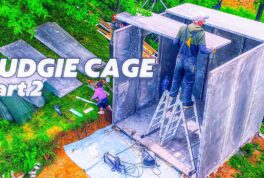
I did not plan to build a playground that day. I had an old nest box left over from a previous project – the one I made for budgies and cockatiels – and I did not need it anymore.
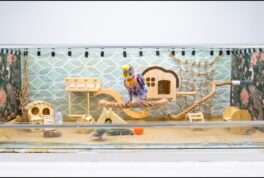
Instead of throwing it away, I cut it up, painted it, screwed a bunch of different 59 budgie toys onto one board, and hung the whole thing in the budgie aviary.
That one board is now a climbing wall, chew station, swing frame, and lookout point. And yes, it took millet spray to convince the flock to touch it.
Here is exactly how I did it, what worked, what I would change, and what else happened in the aviary that week – mice in the walls, autumn cleaning before winter, too many zebra finches, and an important update on my cat Tom.
You can see the full build and the first reactions here:
I Built a DIY Budgie Playground My Birds Can’t Resist!
Why Budgies Need a Play Area Outside The Cage
Budgies are not ground birds. In the wild they sit high, climb, chew bark, explore holes, and move all day.
A cage, even a big one, does not give them that. That is why so many pet budgies end up with the same problems: boredom, screaming, feather plucking, biting, and chewing furniture, curtains, TV remotes, and door frames.
What fixed it for my flock was not one expensive toy. It was more places to climb and chew up high.
A hanging playground works because it gives them:
- different textures to chew
- perches at different heights and thicknesses
- moving parts that make noise
- a high spot to sit and watch from
- something new to be suspicious of, then proud of
You do not need a huge aviary for this. The board I used would also fit on a wall above a playstand in a living room.
What I Started With: A Recycled Nest Box
I did not buy a new board. I used the front and side panels from that old nest box.
It was already the right size for a small playground – solid wood, easy to drill into, and light enough to hang with two strings.
If you do not have an old nest box, any untreated hardwood board works. Just avoid chipboard, MDF, plywood with strong glue smell, or painted wood from unknown sources. Budgies will chew it. Whatever is in the wood ends up in the bird.
How I Cut The Climbing Holes
Budgies love holes. They climb through them, peek through them, hang from the edge.
To make them, I did it the simple way:
- Drill 2-3 holes in a row in the board
- Connect the holes with a jigsaw or hand saw
- Sand the edges smooth so there are no splinters
That gives you an oval opening instead of a perfect circle, which is actually better. It looks more natural and gives their feet more grip.
Make 1-2 openings per board, not five. You still need solid space to screw toys onto. And sand everything. Budgie feet cut easily on rough wood.
Bird-Safe Paint: What I Used
I painted the board with a water-based, bird-safe paint and let it dry completely in the sun.
Two rules I follow:
- Only water-based paint marked as safe for children’s toys or indoor use with low VOC. No solvent-based paint, no spray paint with strong fumes, no creosote, no varnish.
- Let it dry and air out fully. Mine dried outside on a sunny day until there was zero smell.
Paint is only for looks. The birds do not care about color. If you are not sure about your paint, skip it and leave the wood natural. Natural is always safe.
How I Turned It Into a Hanging Playground
Once the paint was dry, I started adding toys to the board instead of hanging them one by one around the aviary.
On this first version I added:
- a large natural-wood swing made from a garden stick
- small bells
- a spinning wheel from a cheap online bird toy set
- short perches at different angles
The idea is simple: one board, lots of 62 diy bird toys in one place, and you can keep upgrading it. Next time I want to add a ladder, a bridge, a tunnel, and more perches for the open section of the aviary.
You do not have to build every toy from scratch. Some of these plastic wheels and bells are so cheap online it makes no sense to make them. What makes sense is combining them on one board so the birds get more use out of them.
The Swing: Save 10 Euros With a Garden Stick
You can find a suitable wooden stick in almost any park or garden. That alone saved me about 10 euros compared to buying a ready-made large swing.
The metal hardware for hanging the swing is cheap. The build is just: stick + two chains / wires + two hooks in the board.
I made mine large on purpose. Male budgies bob their heads, sing, and walk side to side on a perch when they show off. On a long swing they can do that whole dance without falling off. It keeps them busy for hours.
If you use branches from outside, use only bird-safe trees. Apple and peach are two I use. Wash them, scrub them, let them dry, and only use branches from trees you know were not sprayed with pesticides.
Bells And Noisy Toys
Add 2-3 bells. Budgies go crazy for bells.
Even a male that already has a mate will sit and talk to a shiny bell, ring it, tap it with his beak, and feed it like it is a friend. Females chew them more than males, in my experience.
Check bells regularly. If the clapper breaks loose or the metal cracks and leaves a sharp edge, replace it.
The Spinning Wheel
This was from a set of cheap 67 parrot toys I ordered for a previous project. It is just a small plastic wheel on a screw.
Important detail from my build: at first the wheel did not spin. I had tightened the screw too much because I was afraid it would spin too fast and scare them.
Budgies only weigh 30 to 40 grams. They are much lighter than you think. I had to loosen the screw a little until a 35-gram bird could move it. Not loose enough to wobble, just loose enough to turn when they push it.
Why I Mounted Everything Vertically
I placed all perches and toys vertically on the board, not horizontally.
That was on purpose, because of droppings. Horizontal boards collect poop. Vertical boards do not. If you want a playground that stays clean, think about where poop will fall before you drill anything.
How and Where to Hang It
Budgies feel safer up high. On the ground they are nervous. Up high they play.
So I hung the playground high in the aviary, and I attached it on both sides so it cannot spin around in circles.
That second string matters. A board hanging from one point turns into a merry-go-round the first time three budgies land on one side. Most birds will not touch a toy that spins unexpectedly. Two attachment points keep it stable but still with a slight sway, which they like.
If you are doing this indoors, hang it above the playstand or near – not directly over – their cage, at your eye level or higher. Do not hang it over food and water bowls.
Will Budgies Actually Use It? The Millet Trick
Building it is the easy part. Waiting for them to touch it is the hard part.
Budgies are suspicious of anything new. Mine stared at the board for a full day and would not go near it. That is normal. This is called neophobia – fear of new things – and almost every 71 budgie has it.
What worked the next morning:
- I waited until morning when they were hungry
- I stuck millet spray all over the playground – in the holes, on the swing, next to the wheel
- I stepped back and let them come
Once they want millet, fear disappears. They flew in like there was no tomorrow.
Two notes:
Millet is a treat, not daily food. Use it to introduce a toy, then take most of it away. If they get millet every day on the playground, they will only go there for millet.
And do not force it. Let the bravest bird go first. The rest will follow within minutes once they see one bird eating and not dying.
In my video you can see who dared first, how they reacted to the spinning wheel, and how fast the whole flock changed from scared to possessive.
Male vs Female Budgies On New Toys
People ask me why I would give away females but never males. Here is the honest answer from living with a large flock:
Every budgie is different, but in general in my aviary:
Male budgies play more, sing more, socialize more, and stay friendly longer. They will spend 20 minutes talking to a bell.
Female budgies chew more, shred more, bite harder, and once they pair up and get hormonal, their priorities change completely: lay eggs, protect the nest, feed chicks, repeat. They are less interested in you and in toys during that phase.
That does not mean females are bad pets. Some of my smartest birds are females. It just means if you build a playground, expect the females to destroy it faster. That is actually a compliment – it means they are using it.
Aviary Update: Mice, Cleaning, and Winter Prep
While the paint was drying I was cleaning the big aviary where the zebra finches and cockatiels live. And I have to be honest: I am losing the battle against mice there.
Even with cats around the garden, they keep coming. Other aviary owners told me they have the same problem, so I know I am not alone. If you have something that actually works and is bird-safe, leave a comment under the video. I am getting desperate.
What I know so far:
In the budgie aviary I have no mice inside. I put ceramic tiles around the inside on the floor and concrete around the outside. That stopped them digging straight in.
But now they nest in the insulation in the walls. Someone warned me in the comments this would happen. They were right.
Poison is not an option for me with birds, chickens, and cats around. Traps help for a few days, then new mice come. Cleaning up spilled seed every evening helps more than anything else I have tried.
Why Autumn Cleaning Cannot Wait
I cover the budgie aviary floor with paper rolls, so I do not have to scrub every day. But autumn is the last window to do a deep clean.
During the summer heatwave it was almost impossible to clean and stay alive in there at the same time. In a few days it will be too cold to do anything outside comfortably. If I do not clean now, the dirt, feathers, and old food sit there all winter.
With a flock this size, that means more bacteria, more mold, more breathing problems. So: change paper, scrub perches, wash water bowls with hot water, throw out old cuttlebone, check nest boxes for mites even if you are not breeding.
Seed Storage Warning
Good seed in bad storage becomes bad seed fast.
Do not keep seed in a humid or damp shed. Damp seed grows mold, collects mycotoxins, and breeds bacteria. Birds eating that get liver problems, crop infections, and weak immunity without you seeing why.
Keep seed dry, cool, dark, in closed buckets or barrels, off the floor. If it smells musty, clumps together, or has webbing in it, throw it away. It is cheaper to buy a new bag than to treat a sick flock.
Zebra Finches: From 8 Birds to 70 Birds
Someone in the comments once told me I would end up with way too many zebra finches in that big aviary. They were right again.
I started with 8. I ended up with around 70.
I just caught about 20 and sold them to another aviary breeder. That was my first time selling birds. It helped pay for food, because 70 finches eat a shocking amount of seed.
I still have around 50 and I need to catch at least 20 more so I can bring in unrelated birds. Without new blood, you get inbreeding, smaller chicks, and health problems in a few generations.
If you want to breed zebra finches, it is simple if conditions are right:
- a nest box they like, or material so they can build their own
- fresh food and water every day
- plenty of space
- nesting material – they will gather everything they can find and weave their own nest
Mine are Australian birds living in the middle of the Balkans in Europe, and after some time here you can already see a bit of that wild behavior come back. They build, they argue over material, they defend nests.
But do not start unless you have a plan for the chicks. They breed fast.
Tom Update: Why Changing Vets Finally Helped
Tom is the cat that walked into our house in 2021 when we bought it and decided he lived here. The garden was empty then. Now it is a house, garden, aviaries, 61 budgies , cockatiels, button quails, zebra finches, and chickens. Tom is convinced all of it belongs to him.
A few days before this video his eyes were closed. The first vet checked him and treated it, but after that he got worse – lots of saliva, heavy breathing, strange sounds when breathing, and one day he walked past his food without eating. For Tom, skipping food means something is seriously wrong.
We went back. He got injections and special food for immune support. His lungs were fine, which was the good news. I also started giving him one immune support capsule a day, same as I do for the birds before winter.
After three shots he was eating better but still breathing strangely. So we changed vets.
The new vet found it: three completely decayed teeth with a major tooth abscess. That was causing the saliva, pain, not eating, and breathing sounds.
They removed the three teeth. Tom started eating like crazy again almost right away.
He is getting older and these things happen. I am just glad we kept pushing for another check instead of accepting “it is a virus.” If your cat stops eating, drools a lot, and breathes loudly after eye problems, ask the vet to check teeth and mouth thoroughly.
Garden Notes: Tomatoes, Sunflowers, Spinach and Millet
The garden is losing its green color. Autumn work is basically the opposite of spring work: in spring I prepare everything, in autumn I clean everything.
What I am doing now:
- collecting sunflower heads – my wife prepares the seeds for next season
- pulling dead tomato plants – I even found one last hidden tomato
- planning spinach for next year – chickens and all birds love it, and so do we
- saving one spot just for growing millet spray next year
I tried growing millet in the big aviary. It worked, but the birds shredded it before it could fully grow. Next year it gets its own protected spot outside the aviary.
Sunny autumn days are precious here. If you keep birds outside, use those days to fix, clean, and let birds sunbathe. Winter comes fast in Bosnia.
FAQ
Is a DIY playground safe for budgies? Yes, if you use untreated wood, bird-safe water-based paint or no paint, stainless steel or nickel-plated hardware, and natural perches from unsprayed trees. Avoid pressure-treated wood, MDF, strong-smelling glue, lead or zinc parts, and loose threads they can tangle in.
Why won’t my budgies touch a new toy? Because they are wired to fear new things. Leave the toy near the cage for 2-3 days, then hang it high, then use millet spray in the morning when they are hungry to lure the bravest bird. The rest follow.
What wood is safe for budgie perches? Apple, pear, peach, willow, hazel, and eucalyptus are commonly used. Always wash branches, dry them fully, and only take them from trees you know were not sprayed.
How high should I hang a budgie playground? As high as practical in the room or aviary – eye level or higher. Budgies are not ground birds and play far more when they are up high with a clear view.
Can I use millet every day to train them? No. Millet is a treat. Use small pieces for training and introducing toys, but base diet should be quality seed mix, pellets if your birds accept them, vegetables, and clean water.
How do I keep mice out of an outdoor aviary? There is no perfect fix. What helped me most: concrete apron outside, tiles inside to block digging, removing spilled seed every evening, storing feed in sealed containers, and sealing gaps. Do not use poison around birds and cats.
What I Would Do Different Next Time
I would build the second one bigger, for the open section of the aviary, with a ladder on one side and a bridge on the other so birds can walk onto it instead of only flying onto it.
I would also pre-drill extra holes in the board for future toys. That way I can swap toys without taking the whole board down.
But even this small version proved the point: budgies do not need complicated toys. One board, a swing from a garden stick, a few bells, a wheel that actually spins for a 35-gram bird, hung high and introduced with millet – that is enough to keep them climbing, chewing, and playing for weeks.
If you build one, start simple, hang it stable, and let millet do the convincing.
Thanks for reading, and thanks to members for supporting these builds. See you in the flock.


Add comment