


Last week I walked into the aviary and stopped. Several budgies had thin, patchy spots on their heads. A day later, more birds looked the same.
If you have never seen a heavy autumn molt start almost overnight, it looks wrong. Bald skin, tiny spikes sticking out of the head, feather dust everywhere. My first thought was the same as yours: is this sickness, mites, bullying, or just molt?
This is what is happening in my aviary right now in mid-October, after heavy rain and a sharp temperature drop, and exactly how I handle it — diet, vitamins, hygiene, and what I watch for to separate a normal seasonal feather change from something that needs a vet.
Watch the full video here: My Budgies Are Losing Head Feathers, and I Don’t Know Why
What this article covers:
- What the feather loss looks like in my flock
- What pin feathers are and why the head looks worst
- Normal molt vs. warning signs
- Why outdoor budgies molt the way they do
- Behaviour changes during molt
- Feather dust, cleaning and ventilation
- What I feed during molt
- Vegetables and fruit that actually help
- Calcium, cuttlebone and mineral blocks
- Liquid vitamins: what I bought and how I use them
- Cage size and shape if you are upgrading
- Getting the aviary ready for 1°C nights
- The two birds I am watching for virus
- My daily molt routine
- FAQ
1. What I saw in the aviary
Autumn arrived here after one heavy rain. You can feel it in the air. I still keep the aviary doors open during the day, but nights are going down toward 1°C, so I will start closing up soon.
Almost at the same time, the flock started molting. Not one or two birds — practically everyone.
On the head and around the cere and eyes, feathers thinned out. On some birds you can see skin between the new spikes. On green and yellow birds it shows more. On the perches and around the food dishes there is fine white dust and small down feathers.
I started liquid vitamins and fresh vegetables right away while I watch them. Not because vitamins fix everything, but because molt is hard work on the body and I want the basics covered.
2. Pin feathers: those tiny spikes on the head
What looks like spikes is new feather growth. They are called pin feathers, or blood feathers in the early stage.
Each new feather grows inside a protective keratin tube. In the early stage that feather has an active blood supply. Blood brings oxygen and nutrients to the growing feather. As the feather matures, the blood supply recedes from the tip toward the base, the sheath dries and starts to flake off, and the feather unrolls.
That is why:
- New pins look dark, waxy, or striped at first
- They feel sensitive — birds often do not like to be touched on the head during this time
- Mature sheaths look white and flaky
- Birds preen each other more — a partner can crack open sheaths on the head where the bird cannot reach itself
You will see a lot of mutual grooming in a molting flock. Gary, who now lives with the flock, is a good example. He is a different bird since he moved in with other budgies — calmer around birds, more social, and he joins the grooming. Seeing him settled like that tells me the social side of molt matters too.
3. Why the head always looks the worst
Head feather loss scares owners because you cannot miss it. There are two practical reasons it looks worse there:
- Head feathers are short and tight to the skin. Even a small gap shows skin.
- Budgies cannot preen their own heads properly. Sheaths stay longer, pins stick straight out, and the bird looks spiky and bald until flockmates help or the sheaths break naturally.
Body molt is spread over wings, back, tail and chest, so it blends in. Head molt is concentrated in a small area, so it photographs badly and worries people.
In my flock right now, heads are the main place you notice it, even though they are losing small feathers all over.
4. Normal autumn molt vs. a real problem
I do not diagnose from photos or comments. I watch the birds. Here is how I separate routine molt from a reason to act.
Looks like normal molt:
- Many birds start at the same time after a weather and daylight change
- Pins present — spikes, sheaths, new feather tips opening
- Feather dust increases, but droppings, appetite and activity stay mostly normal
- Bird may be quieter or grumpier for a few days, then back to normal
- No raw bleeding wounds, no completely bare chest/back that stays bare for weeks, no deformed new feathers across multiple birds
Makes me look closer:
- One bird stays bald while the rest regrow
- New feathers grow twisted, curled, broken, or bleed repeatedly
- Heavy feather loss with lethargy, fluffed-up sitting, weight loss, sneezing, tail-bobbing, or change in droppings
- Loss concentrated around beak/eyes with crusts or sores
- Repeated heavy molts back-to-back with poor regrowth
Supplements do not fix viruses, mites, or bacterial skin issues. If feather regrowth is persistently abnormal, or a bird looks sick beyond being a bit quiet during molt, an avian vet needs to see it. I will say this plainly because it matters: liquid vitamins cannot prevent or cure PBFD or other viral feather diseases.
5. Outdoor budgies molt differently than indoor budgies
My birds live outside, so they get natural daylight shortening, temperature swings, rain, and wind. Those seasonal cues push many birds into molt at once.
Indoor budgies live under artificial light, steady heating, and a fixed day length. Their molt is often less predictable — lighter molts scattered through the year, or a heavy molt at an odd time after a move, a lighting change, or stress.
Neither is automatically better. But it explains why my whole aviary can start in the same week, while someone’s single indoor budgie molts in February.
Nutrition, stress, breeding history and general health also shift timing. Females that laid eggs and raised chicks this season, like some of mine, go into autumn with higher demands. I pay extra attention to those hens.
6. Behaviour during a heavy molt
Expect your budgies to act a little off.
Mine get:
- Quieter, less playful for a few days
- More itchy and restless — lots of scratching and preening
- Sensitive on the head and neck — they duck away from fingers
- More interested in mutual preening
- Sometimes a bit irritable with flockmates over perches
That alone is not illness. Growing thousands of feathers takes energy and the pins are uncomfortable.
What I do not accept as “just molt” is a bird that sits fluffed on the floor, stops eating, sleeps all day, or loses weight. Molt does not switch off appetite and droppings should stay normal.
7. Feather dust, cleaning and air
During molt the fine white powder gets everywhere — perches, seed dishes, water, cage bars.
Budgies produce feather dust naturally. You just notice it more when they replace feathers.
I clean more often during molt and keep three things strict:
- Dry: No damp bedding, no old wet food sitting around. Damp plus dust is how respiratory irritation and bacterial growth start.
- Ventilation without draft: Fresh air moving, but no cold wind blowing straight on birds at night, especially now that nights are getting cold.
- Water: Fresh every morning. If I add anything to water, I still change it daily. Supplemented water left for two days is not “stronger,” it is just old water.
If you keep birds indoors, a molt week is a good time to vacuum around the cage daily and wipe the area. If anyone in the house coughs from dust, an air purifier near the cage helps, but it does not replace cleaning.
8. What I feed during molt
Feathers are almost all keratin, a structural protein. Regrowing them needs steady protein and the right amino acids over weeks, not a one-day protein bomb.
I do not overload with egg food suddenly. A balanced, complete daily diet does more than a week of extra eggs.
My base stays the same:
- Good quality seed mix as the base
- Clean drinking water, changed daily
- Cuttlebone available at all times
- Fresh vegetables daily during molt
- Soft food in small amounts, removed before it spoils
For birds that just finished breeding, this matters twice. Egg laying pulls calcium and condition out of hens. They need weeks of steady feeding to recover before winter, not just a vitamin drop in water.
Pingo is my reminder of this right now. His energy and feather condition are not where I want them. He was immediately interested in the new clay mineral block, which is good, but one block does not fix condition. He gets the same balanced diet as everyone else, plus close watching. Supplements are support, not a repair shop.
9. Vegetables and fruit I actually offer
My budgies get variety instead of the same leaf every day. From the video you saw strawberries, nectarines, apples and carrots — all accepted well when fresh and clean.
What I use most in molt season:
- Carrots, pumpkin, red pepper: contain beta-carotene, which the body can convert to vitamin A. Vitamin A supports skin, feathers, and the lining of the respiratory and digestive tract.
- Dark leafy greens: useful micronutrients and foraging value — birds like tearing leaves.
- Cucumber and other water-rich vegetables: help with hydration and are easy to take for shy eaters.
- (radius)Broccoli, chard, dandelion leaves (unsprayed), bell pepper: good rotation options if your birds accept them.
Rules I never break:
- Wash everything.
- Cut fresh, serve raw where appropriate for the species, and remove after a few hours.
- Never leave fresh fruit and vegetables until the next day.
- Check safety before offering something new — not everything we eat is safe for birds.
- Introduce one new food at a time so you know what caused loose droppings if it happens.
Feeding vegetables is not only nutrition. Tearing, chewing, and exploring new textures is enrichment. A simple carrot slice can keep a curious budgie busy, encourage natural foraging, and reduce picking at sensitive pins out of boredom.
10. Calcium, cuttlebone and mineral blocks
Calcium builds bones, supports muscles and nerves, and hens need it for eggshells. But a normal molt does not automatically mean your bird is calcium-deficient.
What works in my aviary year-round:
- Cuttlebone: always available. Birds take what they need.
- Mineral block: I picked up a clay-based block made with clay, oyster shells, sea shells and red stone. Depending on exact ingredients, it is a useful mineral source. Yes, it costs a bit more than a plain block, but I keep one in the aviary as standard.
- Balanced diet first: no powder replaces daily nutrition.
Do not stack three calcium products plus two vitamin products at once “to be safe.” Too much vitamin A and D3 can harm birds. Read labels and do not combine supplements blindly. If you are unsure, ask an avian vet before mixing.
11. Liquid vitamins: what I bought and how I use them
At the pet store I looked for something simple to support the flock through molt. I chose a liquid supplement with vitamins and L-carnitine, marketed to support energy metabolism during molting.
How I use it:
- Only a few drops per water dish, exactly as the bottle says
- I measure the water amount — guessing the dose is how people overdose
- Fresh supplemented water in the morning, replaced the next morning
- No double-dosing with another multivitamin in the same water
Three honest limits with liquid vitamins in a large aviary:
- Uneven dose. Some birds drink more than others. You never know how much each bird got.
- Stability. Some vitamins lose strength once diluted in water and light. Fresh daily matters.
- Not always needed. If birds already eat a balanced diet, extra vitamins every molt are not automatic. Multivitamins help when the diet lacks something. They are not a routine “molt cure.”
Omega-3 products sit in the same category. They are in many bottles, they are not required for every bird, and they do not guarantee better feathers. Good diet first, targeted supplement only if there is a reason.
12. If you are thinking about a bigger cage
The pet store had changed a lot since my last visit — more cages, larger parrot cages, metal bowls that are easier to clean, more natural-looking perches. Demand after the pandemic clearly pushed the range up.
If you are upgrading for budgies, what I look for:
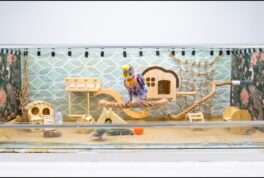
- Rectangular, not round. Round cages give less usable space and less sense of security. I do not recommend them.
- Width over height. Budgies fly horizontally from perch to perch. A wider cage is more useful than a tall narrow tower.
- Room for movement: space for at least two perches at different ends, toys without blocking flight path, food and water without crowding.
- Easy to clean: large doors, removable tray, metal bowls you can wash fast.
- Natural perches: different diameters, wood that is safe for birds, placed so droppings do not fall into food and water.
Bigger is better only if it is safe — bar spacing for budgies, non-toxic coating, secure doors, no sharp edges.
13. Preparing for cold nights
Molt plus cold is a double load. Wet feathers, wind and 1°C nights are a bad combination.
My plan for the next weeks:
- Close aviary doors at night once temperatures drop hard
- Keep the inside dry — no wet food overnight, no leaks after rain
- Keep day access to fresh air as long as days are reasonable
- Watch hens and any bird in weaker condition — they feel cold first
- Keep food supply steady — birds burn more energy to stay warm while growing feathers
I do not heat the whole aviary to summer temperatures. I block wind, keep it dry, and let birds acclimatise with shelter available. Sudden warm-cold swings stress them more than steady cool air with cover.
14. The two birds I am watching more closely
Most of the flock looks like textbook molt — pins, dust, a bit grumpy, still eating.
Two birds worry me a little more. Feather condition and regrowth do not look quite right, and with that pattern I have to keep a feather virus in mind, including PBFD.
To be clear: I am not diagnosing them from the aviary. I am feeding them well, keeping stress low, keeping hygiene tight, and watching regrowth. Supplements alone will not solve it if a virus is involved. If their new feathers stay abnormal, or loss continues outside the flock pattern, they go to an avian vet for testing and advice.
If you have a bird like that — persistent bald areas that do not fill with pins, deformed or bleeding new feathers, beak changes plus feather issues — do not keep adding products. Get a diagnosis. Nutritional, environmental and infectious causes look similar from the outside.
15. My daily molt routine right now
This is the exact loop I run while the flock molts:
Morning:
- Fresh water in all dishes, vitamins measured only where I use them
- Fresh vegetables, small amount to start — more only if they eat it
- Quick visual check: who eats, who flies, who sits fluffed, droppings under favourite perches
- Remove any leftover fresh food from yesterday — nothing stays overnight
Midday:
- Shake off / wipe perches and dish area if dust is heavy
- Check cuttlebone and mineral block — Pingo already claimed the clay block, so I watch intake without blocking others
- Let flockmates preen — I do not pull sheaths off pins myself
Evening:
- Remove all fresh food before dark
- Change dirty water, leave clean water overnight
- Close up as needed for temperature, check no bird is stuck outside shelter
- Note any bird that looked off — I compare day to day, not hour to hour
Small, consistent steps beat heroic one-day fixes.
FAQ: budgies losing head feathers
Is it normal for budgies to lose feathers on the head? Yes, during molt it is common. Short head feathers leave visible skin and pins stick out, so it looks worse than body molt. Look for pin feathers as a sign of regrowth.
What do pin feathers look like? Tiny spikes, sometimes dark and waxy at first, later white and flaky as the sheath dries. Do not pull them. Let them mature or let flockmates preen them gently.
How long does budgie molting last? Light molts can pass in 2–3 weeks. Heavy seasonal molts often take 6–8 weeks for full replacement, sometimes longer in an outdoor flock where many birds molt together.
Should I give vitamins for molting? Only if there is a reason. A balanced diet plus cuttlebone covers most birds. If you use a liquid vitamin, follow the label, measure water, change water daily, and do not stack multiple products. Too much vitamin A and D3 can harm birds.
What should I feed during molt? Keep the normal balanced diet steady, add fresh vegetables daily, offer a little soft food if your birds are used to it, and keep calcium sources available. Do not suddenly overload protein.
Do indoor budgies molt at a different time? Often yes. Artificial light and steady heat make indoor molt less tied to season. Outdoor flocks tend to molt together when daylight shortens and temperatures drop.
When should I worry about PBFD or other disease? When regrowth is abnormal — twisted, broken, bleeding feathers that keep coming wrong — or bald areas stay bald without pins, or a single bird stays bad while the flock recovers. Vitamins do not treat PBFD. An avian vet can test and advise.
Can I touch pin feathers? Better not. They are sensitive and the early ones have blood inside. If you break one, it can bleed a lot. Let the bird and its flockmates handle them.
What happens next in my aviary
For now I keep doors open while days allow, feed steady, keep water fresh, and let the flock do what flocks do — preen each other, argue over the best perch, and slowly turn spiky heads back into smooth caps.
If you are going through the same patchy-head stage, check the basics first: pins present, eating and droppings normal, dust and seasonal timing fit. Support with food and hygiene, go easy on products, and get help early if regrowth looks wrong.
Have your budgies ever gone through a heavy molt like this? Tell me in the comments under the video — I read them.
And if you have a budgie question about molt, diet or housing, ask here: Ask Alen — Budgerigar Questions
Thanks for being part of Budgerigar Nation. See you in the next video.




Add comment