
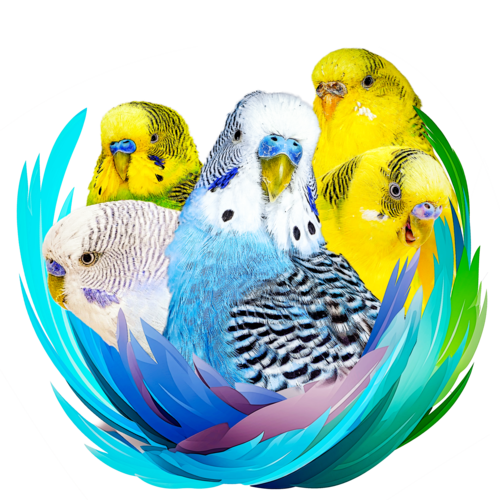


Budgies can learn to sit on your shoulder, play with toys, step up on your finger, and even mimic words. But none of that happens before trust.
Bonding takes time and patience. If you rush it, the bird learns that hands mean danger. If you do it right, the same bird will fly to you on its own. This guide walks you through the exact process from the video, with the details most owners miss.
Watch the original video here:
Why Trust Comes Before Training
A new budgie sees you as a predator. You are big, you move fast, and your hands grab. In the wild, anything that grabs is dangerous.
Training is not about tricks. It is about changing that association: hands bring food, your voice means nothing bad will happen, and coming out of the cage is safe.
If your bird still panics when you put your hand in the cage, do not move to the next step. Go back one step and repeat until it stays calm. That one rule will save you weeks.
This is the core of 62 bird training for parakeets: calm repetition, short sessions, and letting the bird choose to come to you.
Before You Start: Set the Cage Up Right
Most taming problems are actually setup problems.
1. Right cage, right place Give the budgie a cage large enough to stretch, hop, and flutter between perches, with easy access to seed, pellets, fresh water, and cuttlebone. Put the cage in the room where you spend the most time — living room, home office — not in an isolated hallway or empty bedroom.
The point is passive exposure. The bird watches you talk, work, laugh, and walk past for hours every day without any pressure. That alone builds a lot of 63 budgie trust .
2. Do not start taming on day one When you first bring a budgie home, give it 2-3 weeks just to settle. New sounds, new light, new people, new food — that is already a lot.
During this settling period:
- Keep a regular day/night rhythm, 10-12 hours of quiet sleep
- Feed and water at the same times
- Talk softly when you change food and water
- Play music or TV at normal home volume so the bird gets used to household noise
- Leave small treats on top of the cage or just inside the door
You are not training yet. You are becoming part of the background.
3. The wing clipping question
The video mentions this because a lot of new owners ask about it. Here is the honest breakdown:
Possible reasons some owners clip:
- A clipped bird cannot fly far for a few months until feathers regrow
- You can leave the cage door open with less risk of escape through a window
- Early step-up practice can be easier when the bird cannot panic-fly into walls
Reasons many owners and vets do NOT recommend it:
- Flight is how a budgie exercises and releases stress
- Losing flight suddenly can be distressing and affect confidence
- Improper clipping causes pain, bleeding, or injury
Trimming done correctly by a professional does not cause pain, but it is still altering the bird. Do not do it yourself from a YouTube tutorial. If you are considering it, talk to an avian vet first and ask specifically about your bird’s age, health, and housing.
For most pet owners, you do not need to clip to tame. A calm routine in a safe room works fine and keeps the bird fully flighted.
Phase 1: Voice, Presence, and Food Association
Goal: The bird stays calm when you are near and links you to good things.
Do this for 7-14 days before any hand training:
- Sit next to the cage and talk in a low, calm voice for 5-10 minutes, 2-3 times per day. Narrate what you are doing. Budgies get used to the sound of your voice fast.
- When you give food and water, say the same short phrase. For example: “Here is breakfast.”
- Put a piece of millet spray halfway through the cage bars so the bird has to come closer to you to eat it.
- Avoid sudden movements over the cage. Approach from the side at eye level, not from above like a hawk.
Signs it is working: the bird keeps eating when you sit down, chirps when you talk, preens or grinds its beak near you. Beak grinding and one-legged resting mean relaxed.
Signs you need more time: freezing, panting, flying wildly from perch to perch, clinging to the far side of the cage.
This stage is basic 57 budgie care , but it decides everything that follows.
Phase 2: Hand Inside the Cage
This is where most people rush and lose trust. Go slow.
- Open the cage door slowly. Place your hand just inside the door and keep it still. Do not reach for the bird.
- Talk softly the whole time.
- Hold a high-value treat in your open palm — millet spray or a hulled oat, not regular seed mix. Millet works because it is long, so the bird can nibble the far end while staying away from your fingers at first.
- Wait. If the bird moves away, leave your hand there until it calms down, then remove your hand slowly. Do not chase it around the cage.
- Keep sessions to about 10 minutes. One or two sessions per day is enough.
It may take several tries before the bird eats from your palm. That is normal.
Critical rule from the video: never grab the budgie at this stage. Let it come to your hand. Every grab sets you back days because it confirms the bird’s fear.
If you need to catch the bird for medical reasons, dim the lights, use a soft towel, and be as quick and gentle as possible — then go back to trust-building afterward.
This answers the common question 63 how to tame a budgie from scratch : you start with stillness, not touching.
Phase 3: Train to Step Up on a Stick
Once the bird eats from your hand without panic, introduce a perch or stick.
- Open the cage door and slide a small wooden perch or dowel in slowly.
- Gently press it against the lower belly, just above the feet. Do not poke.
- Most budgies will step up to keep balance. Praise calmly and offer millet immediately.
- Let the bird sit on the stick inside the cage for a few sessions. Do not carry it out yet.
Why a stick first? For a scared bird, a finger feels like a predator toe. Wood is neutral. This is classic 67 taming a bird technique — bridge object first, finger second.
Practice this until step-up is boring and predictable: perch comes, bird steps, treat happens.
Phase 4: Finger Step-Up and First Time Out
When stick step-up is solid:
- Hold the stick with the bird on it in one hand, and place your other index finger right next to the stick, like a second perch.
- Nudge very slightly. Many budgies will hop from stick to finger for the millet in your other hand.
- Alternatively, present your finger alone in the same low belly position: finger as a perch, slightly angled up.
- Move extremely slowly. Especially the first time you bring the bird toward the cage door, stop if it flutters. Let it settle, then try again.
Keep your hand steady. Shaky hands scare them. Tuck your thumb in — a sticking-out thumb looks like a beak.
Do not walk around the room yet. Do not lift high. Just bring the bird to the door opening and back to a perch. Short, successful reps build confidence faster than one long stressful outing.
This is also the answer for 55 how to tame a scared budgie and 70 how to tame a traumatized budgie : you shorten the session, lower the pressure, and end on a good note. If the bird steps up once calmly, stop and try again tomorrow. End with food and quiet.
Phase 5: Time Outside the Cage
A tame budgie needs at least one hour outside the cage every day for exercise and play.
Before you open the door:
- Close all windows and doors. Cover mirrors and large windows with a curtain the first few times.
- Turn off ceiling fans. No other free-roaming pets in the room.
- Remove hot pots, open water, and toxic plants.
- Have the cage accessible so the bird can fly back for food and water.
Let the bird come out on its own. Do not pull it out. Sit nearby and talk. Let it fly, land, and look around.
When it is comfortable being out, you can gently lift it on your finger to your shoulder. Shoulder time is a big bonding step — the bird is close to your face and voice. Keep early shoulder sessions short and stay seated. Do not walk under door frames or go outside with a flighted budgie on your shoulder.
Use play as training. Offer a variety of toys — shredding toys, small bells, swings, foraging toys with hidden millet. Rotate two or three toys per week to keep interest. Talk while the bird plays so it keeps linking your voice to fun, not just to handling.
Many owners ask about 64 budgie sounds here: yes, keep talking, whistling, and playing calm music. Budgies are social flock animals. Silence feels unsafe to them.
How Long Does It Take to Tame a Budgie?
There is no 1-day tame. Anyone promising 58 how to tame a budgie in 1 day is selling stress, not trust.
Realistic timeline for a young, healthy pet-store budgie:
- Weeks 1-3: settling, no handling, voice and presence only
- Weeks 3-5: hand-feeding in cage, 10-minute sessions
- Weeks 5-7: stick step-up inside cage
- Weeks 7-9: finger step-up, short outings to cage door
- Weeks 9+: regular out-of-cage time, shoulder, play
Older, aviary, or previously scared birds can take 3-6 months. A baby hand-fed budgie can be faster, sometimes 2-4 weeks. Consistency matters more than age: two calm 10-minute sessions every day beats one long session on Sunday.
If you have three birds and ask 66 how to tame three budgie at once — tame one at a time in a separate quiet room, then bring the trust back to the group. Trying to train a bonded trio together is much slower because they reward each other for avoiding you.
7 Mistakes That Break Trust
- Grabbing to start. Every grab teaches the bird hands are dangerous.
- Training too long. Past 10-15 minutes, both of you get frustrated. Stop early.
- Chasing with a towel for fun. Towels are for vet emergencies only.
- Punishing bites with shouting or flicking. A bite means “I am scared.” Put the bird back calmly and end the session. Shouting makes biting worse.
- No routine. Random training at random times slows learning. Same time, same place, same cue words.
- Only interacting to train. Sit near the cage and do nothing. Presence without demands is powerful.
- Skipping out-of-cage time. A bird locked in 24/7 gets loud, bites more, and plucks. Flight and play are part of taming, not a reward after taming.
If you think “my budgie hates me” — it does not. The search 62 my budgie hates me is common because fear looks like hate. Fear is fixable with distance, food, and repetition.
Taming Without Millet? What Treats Actually Work
Millet spray is the easiest because it is long and high-value. If you want to know 69 how to tame your budgie without millet , use the same method with a different reward:
- Hulled oats
- Small pieces of fresh dill, chickweed, or broccoli floret tips
- Canary seed as a jackpot, fed only during training
- For some birds, head scratches become the reward — but only after hand trust exists
Remove the training treat from the cage outside sessions so it stays special. The bird should think: that food only comes from the hand.
FAQ: What Owners Ask Most About Taming
How do I tame a budgie who doesn’t let me pet them? Do not start with petting. Start with feeding from an open palm, then stick step-up, then finger step-up. Petting comes last, and many budgies never like head pats — they prefer sitting near you. Proximity is still trust.
How do I tame a super scared budgie? Make the world smaller and quieter. Move the cage to a calm wall, half-covered at first, train in the morning when birds are naturally calmer, keep sessions to 5 minutes, and reward any approach. No direct eye stare — blink slowly and turn sideways.
How do I choose a budgie for tame? A younger bird that already eats near people, looks curious rather than panicked, and has no signs of illness will usually tame faster. But any healthy budgie can learn trust with the method above. Temperament matters more than color or mutation.
Can I tame an older or rescue budgie? Yes. Expect a longer Phase 1 and Phase 2. Let the bird set the pace, use the same 10-minute structure, and measure progress in weeks, not days.
Should I train 66 budgie breeding pairs? Do not try to tame actively breeding pairs with eggs or chicks in the nest. Leave them calm and quiet. Work on taming outside breeding season.
Daily Checklist You Can Stick on the Fridge
- 2x calm talk sessions, 5-10 min
- 1-2x hand-feeding sessions, max 10 min each
- Fresh water + food check, same phrase each time
- Cage in social room, normal music/TV volume
- Stick step-up reps only if hand-feeding is calm
- 60+ min supervised out-of-cage time once finger step-up is solid
- Rotate toys, keep talking during play
- Windows/doors/fans checked before any outing
Print that for 30 days. That sheet does more than any trick video.
Final Note From the Aviary
Trust is not a single moment when the bird steps up. It is dozens of small moments when nothing bad happened.
Sit down. Talk softly. Offer millet. Keep your hand still. Stop before the bird gets tired. Repeat tomorrow.
Do that long enough and one day your budgie will fly to your shoulder on its own — not because you caught it, but because it chose you. That is the whole point of learning 62 how to tame a bird properly.
If this helped, watch the full walkthrough again and subscribe to follow the flock:










Add comment