
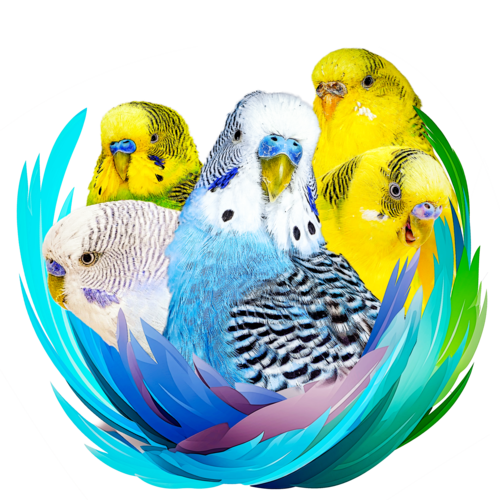


Budgies are often the first pet in a family. They are small, social, do not need walks outside, and kids bond with them fast. They are also fragile, easily scared by sudden movements, and need a daily routine with no skipped days.
The question is not if your child loves the bird. The question is if your child understands this is a living creature that eats, drinks, sleeps, gets sick, and needs calm every day – even when the child is tired or bored.
After years living with a flock, my rule is simple: a child aged 6 to 8 can take part in 57 budgie care with constant parent supervision. Independent care without supervision is out of the question at that age. Anything under 6 is too early for any responsibility. At that age the child only learns by watching from a distance.
What is the minimum age for budgie care?
Around 6 to 8 years old, but maturity matters more than the birthday.
A 6-8 year old can usually:
- listen to an instruction once and repeat it back in own words
- approach slowly, speak quietly, and stay by the cage for 10-15 minutes
- pour measured food and change water without spilling and without grabbing the bird
- help with cleaning – throw out dirty paper, wipe the tray, add fresh liner
- notice basics: bird eats, drinks, moves, chirps vs. bird sits fluffed up at the bottom and does not react
Even then the parent stays the responsible person. The parent measures food, checks hygiene, monitors health, and decides when the bird needs an avian vet. The child is a helper learning the routine.
The reason for the 6-year line is practical. Before that, motor control is rougher, grip is hard to control, attention lasts only minutes, and understanding consequences is weak. A 4-year-old does not understand that a grip that feels gentle to him can break a rib on a 30-40 gram budgie or cause shock from fear.
Why kids under 6 struggle with budgies?
Three concrete problems repeat in almost every family with 26 budgies and younger children :
1. Rough handling without intent. Small kids grab with the full fist, squeeze, pull tail or wings, drop the bird from height. A budgie cannot take that. Result is injury, stress, feather plucking, or complete loss of trust so the bird starts fleeing from hands.
2. Short attention and skipped routine. Budgies need fresh water every day, food at the same time, a clean cage, and social time. A 3-5 year old wants it today, forgets tomorrow. A bird cannot wait until it becomes interesting again.
3. Noise and sudden moves. Screaming, banging on the cage, running around the cage, pushing fingers through the bars – for a budgie that is a predator signal. The bird starts panic-flying into the bars, refuses to come out, and stops vocalizing.
That does not mean a younger child cannot be in the same room. They can, but only on a parent’s lap, watching from a distance. The parent does everything, and the child learns that we do not touch the bird while it sleeps, we do not pull it out by force, and we do not feed bread, biscuits, or food from our plate.
What budgies actually need – the lesson a child must learn
Before any task, the child must know the basics. Do not explain it all at once. One day – one topic.
Diet: good quality seed mix for budgies + vegetables every day. Chard, broccoli, carrot, zucchini, bell pepper, boiled egg in small amount once a week during molt. Fruit 2-3 times per week in small pieces. Fresh water daily, bowl washed, not just topped up. Forbidden: avocado, chocolate, coffee, alcohol, salty food, onion, garlic, food from your plate.
Cage: bigger is always better. Minimum for one pair is 60 cm wide, but 80-100 cm is the real measure for daily movement. Natural wood perches of different thickness, 2-3 toys on rotation, swing, mineral block and cuttlebone. Do not keep the cage in the kitchen because of teflon fumes, smells, and sudden temperature changes.
Sleep and quiet: 10-12 hours of sleep in dark and quiet. If the living room is loud until midnight, cover the cage with a breathable cover or move the bird to a quieter sleeping room.
Social time: budgies are a flock species. A lone budgie without interaction goes quiet, fluffy, and nippy. Daily minimum 30-60 minutes of talking, whistling, step-up training on a finger, and free flight in a safe room once trust is built.
A child does not learn this by heart. They learn by doing: pour water and check if it is cloudy, change paper and see how much droppings is normal, sit by the cage and count how many times the bird eats in 10 minutes.
Age-appropriate tasks – what to give and when
Do not give a child everything at once. Start with one task until they do it safely three days in a row.
Age 6-8 – only with a parent standing next to them:
- pouring pre-measured food from a box into the bowl
- changing water – take bowl out, wash, fill fresh
- holding the bag while the parent cleans the tray, adding clean paper
- quiet talking to the bird for 10 minutes, without opening the cage door
- reporting to parent: bird is not eating, sits at bottom, has strange droppings
A child this age does not let the bird out alone, does not carry it around the flat, and does not clean with chemical cleaners.
Age 9-11 – still checked, but more independent: This is the age parents ask about most – 26 are parakeets good pets for 11 year olds . Yes, if the child is calmer by nature and a parent is involved.
- full morning routine: food, water, quick check of droppings and behavior
- help with weekly washing of bowls, perches and toys with vinegar water and thorough rinsing
- keeping a diary: did it eat, did it fly, was it active
- step-up training with a parent, short 5-minute sessions
- learning when the bird needs rest and leaving it alone then
Age 12+:
- takes over daily routine, parent does evening check
- learns about molt, bluffing in puberty, hormonal season
- helps with quarantine of a new bird and vet visits
- understands cost: food, liner, toys, cuttlebone, vet
Regardless of age, taking the bird outside without a carrier, bathing by force under a tap, and treating illness alone are never kids tasks.
How to teach a child to approach and hold a budgie correctly
This is where most mistakes happen. Kids copy what they see. Show it slow, then ask them to repeat.
Correct approach:
- Wash hands, no strong-scented cream.
- Come from the front so the bird sees you, not from above like a predator.
- Talk quietly 20-30 seconds before you open the door.
- Offer a finger as a perch under the belly, above the feet, do not push into the back.
- If it moves away, stop. Do not chase around the cage. Try later.
Holding in the beginning is only sitting on a finger for 30 seconds with praise. No squeezing the body, no holding wings, legs or tail, no kissing on beak and face because of bacteria.
Three sentences a child must know by heart: I do not squeeze. I do not chase. I do not wake it up.
If the child shouts, runs or bangs, move them away from the cage without yelling. Explain later: imagine you are fist-sized and someone ten times bigger runs at you screaming. That is how the bird feels.
Sick budgie – teach a child to notice in time
Kids are excellent observers when you give them a concrete list. Do not say watch if it is sick. Say exactly what to look at morning and evening for 2 minutes.
Warning signs even an 8-year-old can learn:
- sits fluffed up at the bottom of the cage for over an hour, does not climb to a perch
- sleeps during day with head tucked back and does not react to sound
- suddenly eats half or stops eating, does not drink
- droppings watery, fully white, yellow, with undigested seeds, or missing
- feathers messy, greasy around beak and eyes, sneezes, coughs, wheezes, breathes with open beak and tail-bobs with each breath
- falls off perch, leans to one side, drags a leg or wing
- suddenly stops talking and playing 2 days in a row
Teach the child the rule: one strange thing – tell mum/dad right away, do not wait for tomorrow. Budgies hide illness until the last moment, in nature a sick bird is the first target. When you can see symptoms, time matters.
Make a card on the fridge with 5 boxes: eats, drinks, droppings normal, active, feathers tidy. The child ticks every evening. That is not a game, that is an early alarm system. Based on that the parent decides to warm the room, move the bird to a hospital cage, and call an avian vet, not a general vet without bird experience.
Safe space for kids and budgies in a flat
The cage does not go where it suits you, it goes where it is calmest for the bird.
Setup:
- corner of a quieter room, at eye level or slightly above, one wall behind the cage gives shelter feeling
- away from entrance doors, hallway where kids run, TV on full volume, and direct sun that overheats
- away from kitchen – teflon, sprays, air fresheners, scented candles and smoke are dangerous
Bird-proof the room before free flight:
- closed windows and doors, blinds/curtains down on glass so it does not hit
- ceiling fan off, cups, pots, aquarium covered
- toxic plants removed: dieffenbachia, philodendron, oleander, lilies and others
- small objects out of reach: beads, threads, rubber bands, bags – choking and tangling risk
- other pets out of the room while the bird is out, no exceptions
Cage doors need a secure latch a small child cannot accidentally leave open. Keep food and supplies out of reach of younger kids.
How to know a 6-8 year old is not ready yet
Age is a guide, behavior is the decision. Delay duties if you see this:
- does not know what a budgie eats and thinks bread, chips or milk are fine
- cannot sit calmly 10 minutes by the cage without yelling and banging
- forgets the task three days in a row and gets angry when reminded
- cries, throws things or punishes the bird when the bird bites or flies away
- wants to carry the bird like a toy, dress it, lock it in boxes
In that case go back to watching. The child watches while you work and asks questions. Try again in 3-6 months. Forcing creates resistance toward the animal and risk for the bird.
What a child gains from caring for a budgie
When done right, both sides win. The bird gets a clean home and company, the child gets skills you do not learn from a screen.
A child sees direct link: I gave fresh water and food, I cleaned, I talked quietly – the bird stepped on my finger and sang. That builds confidence. When they notice the bird is quiet and something is off and they report it in time, they learn empathy in practice, not from a story.
Shared moments – laughter when the budgie imitates a sound first time, quiet when it falls asleep on a shoulder – teach patience. Caring for a weaker being is the best school of responsibility because consequences are not a grade, but health of a living being.
4 ways to turn duties into habit, not chore
From the video, these home-tested methods really work:
1. Task board with pictures. Cardboard on the wall next to the cage: food, water, paper, talk-play, evening check. The child sticks a star when done. Let them decorate the board with drawings of their bird. Their project, their pride.
2. Timer game. Set a timer for 5 minutes: who will change water and pour food more carefully without spilling and noise. Not a speed race at the bird’s expense, but a challenge to make routine fun.
3. Story time. Read a short book about birds or watch an educational video together, then talk: why does a budgie need sleep, why no avocado, what does tail-flicking mean. Kids remember through story, not through bans.
4. Proud owner diary. Small notebook or album with photos: first day home, first step on finger, favorite toy, funny habits. The child shows grandma, friends, teacher. That locks in the role of responsible owner.
Should you gift a budgie to a child?
Honestly, as someone living with a flock: you do not gift a budgie to a child, you gift it to the family.
If you buy a bird to make a child happy for a birthday, and you are not ready to clean, feed, pay the vet and supervise for the next 8-12 years how long budgies can live with good care – do not buy.
A good moment is when the parent wants the bird and wants to teach the child care through it. A bad moment is when the parent wants peace, hoping the bird will entertain the child alone.
Before buying, solve: who is the main caretaker, where does the cage stand, who pays food and vet, who steps in when the child is sick or on holiday, are you ready for morning noise and feathers around the flat. If answers are clear, a budgie will be a perfect fit.
Parent FAQ
Is a budgie a good pet for an 11-year-old? Yes, that is an ideal age for a more serious role. An 11-year-old can run the morning routine, clean with supervision, and train step-up. Still needs adult control for diet, health and flight safety.
Is it better to get one or two budgies for a child? For a child, a pair is easier. Two budgies entertain each other when the child has school and duties, they are less lonely and demand less constant attention. A single budgie bonds faster to a human but needs hours of social time daily a child cannot always give.
What if the child loses interest after a month? It happens. That is why the bird must be family responsibility from day one. Do not punish by rehoming overnight, that is extra stress. Bring routine back to 5 minutes a day, include the child only in the favorite part, like talking or giving greens from hand.
Do budgies bite kids? They can nip when scared or defending territory. A budgie bite is not dangerous but hurts and scares a child. Solution is not punishment, but calmer approach, shorter sessions, and food reward when calm.
If you are a parent thinking about a first budgie, start with watching and one small task. When the child shows they can be gentle, quiet and regular – expand duties. The bird will show you got the rhythm right: it eats willingly, sings, steps on hand, and sleeps calmly.







Add comment